URB Issue 070, The Future Issue, December 1999. Cover art direction and design by Louis Paul Miller for Airline Industries. Images from Björk’s “All Is Full of Love” video, directed by Chris Cunningham, courtesy of Glassworks.
An excerpt from the URB Archive. Originally published in URB No. 070, The Future Issue, December 1999. Interview by Raymond Leon Roker. Photography by Joe Vaughn (@joevaughn).
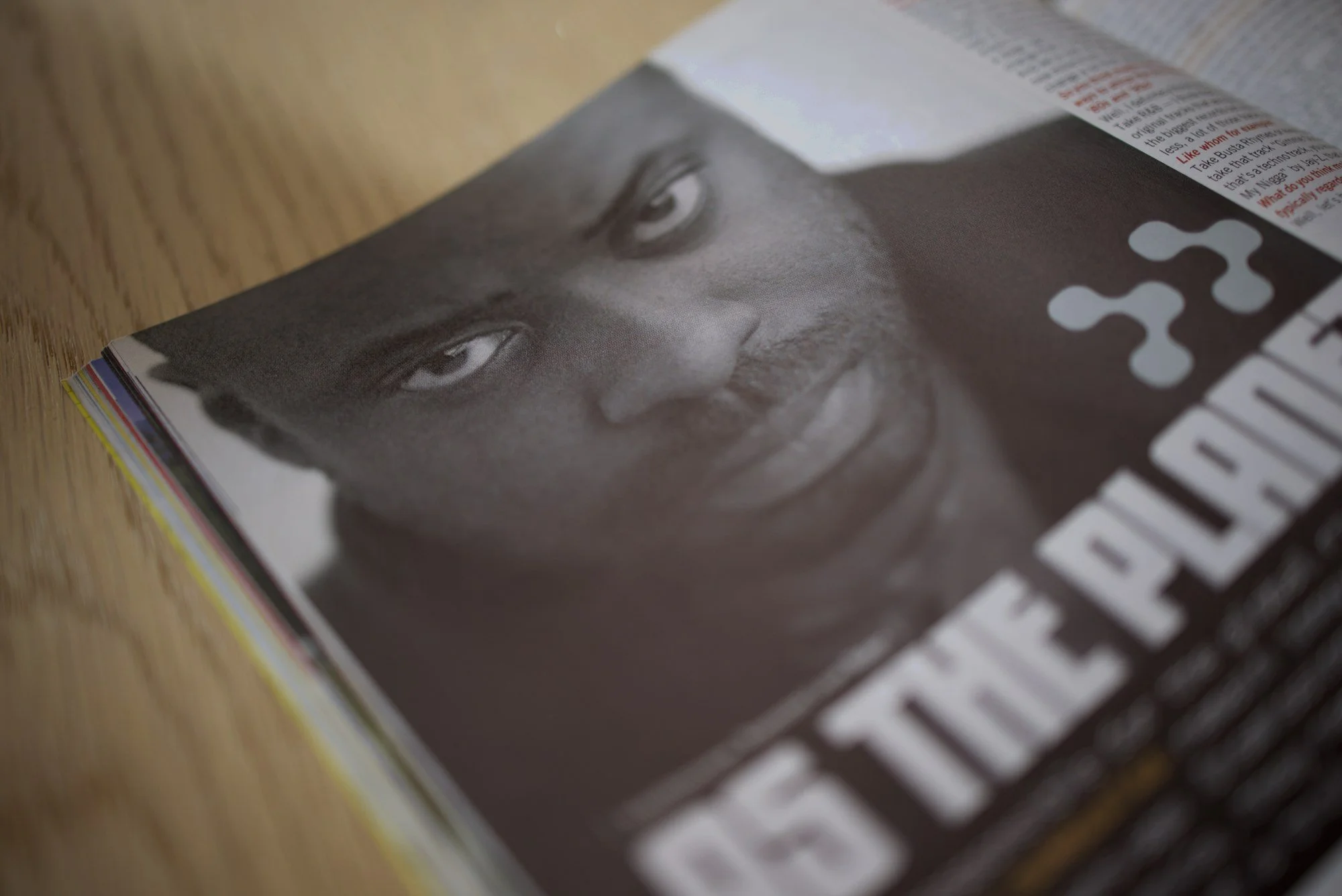
Juan Atkins in URB Issue 070 (The Future), December 1999. Photo ©Joe Vaughn 1999 · @joevaughn
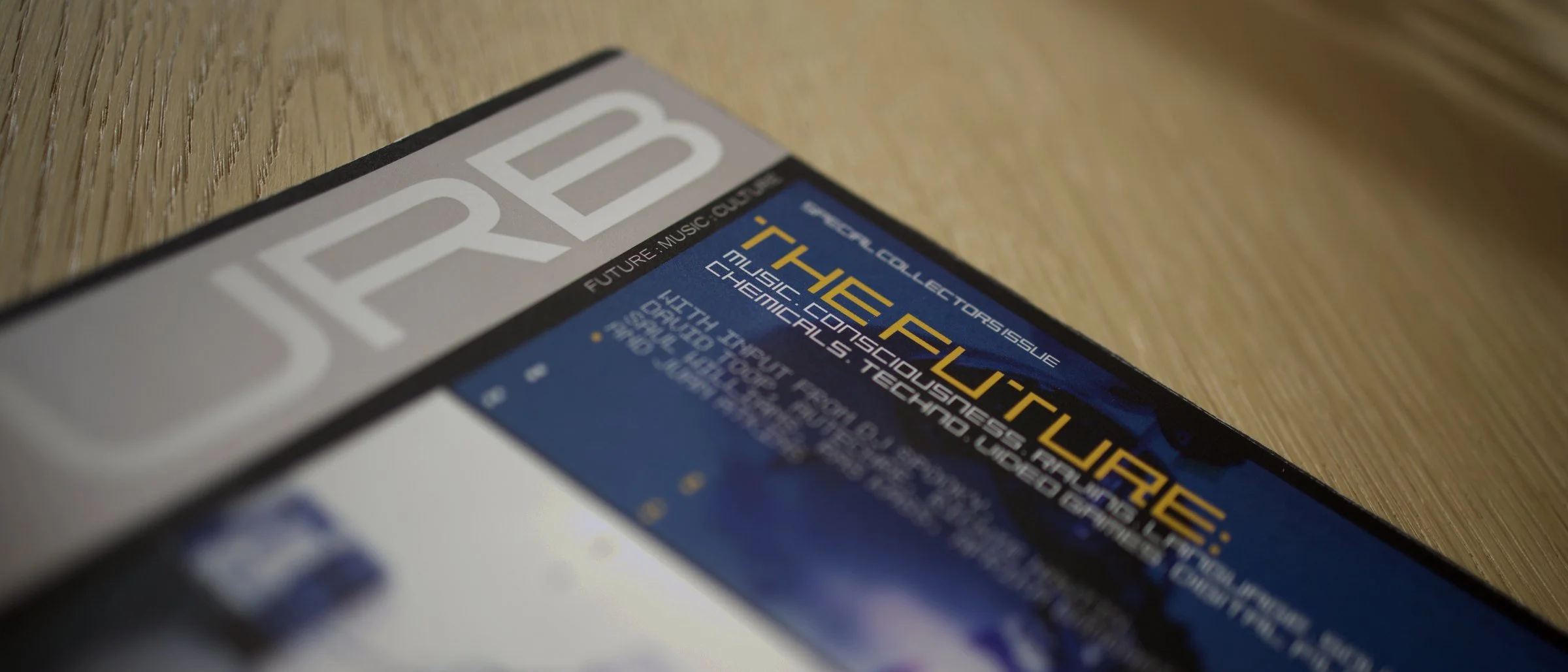
Imagining a Y2K Future
Juan Atkins
How do you think music will evolve technologically in the next few years?
Well definitely the sampler was a huge development and advancement of the technological equipment and the music that you're purchasing. And I think that that changed music definitely and had a heavy impact and made a quantum change. I don't know if we'll have any type of apparatus or anything that will have that much impact in the coming years. But I do believe that we're at a stage right now where I think that a lot of the major change that's happening has already really taken place. And we're just actually getting set, more or less, for the new millennium. And the music is probably not going to change a lot from where it is now.
So you think maybe now we're just learning more exciting ways to utilize the technology that we've invented in the '80s and '90s?
Well, I definitely think that music will be more electronic. Take R&B — I think R&B music will rely heavily more on original tracks that are electronic. If you notice, some of the biggest records out now, the R&B types, like more or less, a lot of those tracks are techno tracks.
Like whom for example?
Take Busta Rhymes or even Jay Z, people like that. If you take that track "Gimme Some More" by Busta Rhymes, that's a techno track, you know? You take even like "Jigga My Nigga" by Jay-Z, that's an all-electronic track.
What do you think makes that track different from what's typically regarded as "electronica"?
Well, let's be honest here. Electronica was a term they used just to keep from using techno, which to me, when you use the word techno, you gotta come back to Detroit. And you gotta come back to black kids in Detroit that developed that term. If you use the term electronica, you don't have to, more or less, trace back to Detroit, 'cause it's a whole different thing. But to me, electronica and techno is one and the same. But basically the difference is, what the definition is, electronica, techno, whatever, in a way you can feel it. Like the four-on-the-floor of techno is more or less a disco rhythm with total electronic track over the top. And I think that that's the main difference between what they consider electronica or techno versus a hip-hop electronic track or a jazz electronic track. There's jazz tracks out there like the fusion stuff. So I think that four-on-the-floor thing and that club-style thing is the only thing that kind of sets it apart.
How do you think issues of race and culture will affect the next generation of music listeners?
I used to think, and I still do think to a certain degree, that the advent of electronic music is bringing the races together more so. Take us guys from Detroit who kind of developed this whole techno thing. I thought it could bring the races more or less together, kind of like break down a lot of those categories, but what I'm noticing is that white kids are listening to electronica or techno or whatever, and black kids are listening to R&B/hip-hop. And that's where the line is comin' down. It's funny that you do some of these parties and go to some of these raves, you don't see very many black kids there. It's like what rock & roll and soul music was like 10 or 20 years ago. It's just a different form now. I thought once that we would get past that. But it seems to perpetuate itself. I think that, to answer the question, I don't see where it would be so much different. I've been making music for 20 years and I see that techno music is just really a new form of rock & roll. And R&B and hip-hop is just the new soul music. And it doesn't seem like it's too much different or that it's gonna be too much different.
So it's like with rock & roll, where black people invented it and then were disenfranchised from it?
And the same way that black people invented techno, they were disenfranchised from it. It's just a different spin and a different twist on it. Just like rock & roll was originally blues but when Jimi Hendrix came along with the electric guitar it changed the whole thing. It was still blues; it was just electric blues. Then they came back and had a different spin on it, just like techno music went over to Europe and it kind of lost the soulfulness through homogenization.
So then are we becoming more connected musically or less?
Definitely, I think so. I think that the change and the growth is slow but I think it is happening. It is happening but at a very slow, almost snail's pace.
How has the definition of techno changed from, say, 1987?
I think the major difference is when we first did [techno music] back in '87, the music had a lot of funk and R&B influences. It had a lot of soul, a lot of feeling. It was very warm, almost like jazz. And then, because of the racial divide in America, the white kids in America had no clue that some black kids were in some basement somewhere doing this kind of thing. Because they don't never want to know. They never want to know what we doing. And to a certain degree, black kids also, we don't want to know what they're doing. It's just the way our country has been developed, to make the sides believe that you shouldn't have anything to do with the other side. So therefore the music went to Europe where, to me, they don't really have that institutionalized racism like we do. And they didn't really have black slavery in Europe. And therefore they can accept black music, the black development and the black innovations a little bit more readily than white America. So the music went there but they added an element that made it a little bit more straightforward with all these hard sounds. More or less, history repeating itself. And techno, to me, took on a more rock & roll edge after going to Europe and coming back. It made it more accessible and more palatable for white America. So basically, the music came back in a more homogenized form and I think the main difference between then and now is that there's a lot less flavor.
So while it's evolved, you think at the same time, it's devolved?
In a way. And that's just because of the racial factor that still exists in our society, even subconsciously. There's a lot of white kids out there that uphold a lot of racial separation policies that don't even know they're doing it. And not to say that that was a course of action they would like to choose, there's some policies set up in this country that they set on automatic pilot 200-300 years ago. So, anyway, to answer your question, basically, the music is just a lot more pristine.
Devoid of some of the funk, some of the soul?
Right, exactly.
Where do you think the geographical center of techno is going to be in the near future?
I would just say definitely North America.
Do you think the music will be controlled by the majors or the indies in the future?
I think that the majors, probably by default, will control the music because the majors have been trying to phase the independents out for years. And I think that the CD was an attempt not only to cut out a lot of pirating, but it was to phase out the independents also, although a lot of the independents have been able to adapt. But to me, that was a concerted effort to phase them out. And if you can recall, right when the time the CD caught hold, a lot of major companies started buying out a lot of independent companies or either starting their own little sub-labels under the guise of being independent. So, I would have to say, as much as I hate to say this, it will be controlled by the majors.
By continuing to emulate and acquire the independents?
Exactly.
Do hip-hop kids and R&B kids understand more about techno today?
You know what? I don't know. I don't think so. The hip-hop crowd and the R&B crowd is a hard crowd, and they're dedicated and loyal. I don't really see that many kids that are really heavily into that, venturing outside of that. So I would tend to say no.
Would you say that your legacy has been treated fairly over the years?
I think the legacy has been treated fairly. I don't think I've been treated fairly. When it comes to me it's strange. When I first started making music, I had no idea that this is where I'd be or this would be my status or this would be something placed upon me. To me, that makes it a lot better than just an average guy just making average records. And throughout the industry and the press and everything has designated me as an originator, not to mention the good music that I'm making also. And do you know that I can't get a proper record deal in North America? After all of this? That does something to you mentally. It's like all you ever wanted to do was be good enough to get on a major record company. And now that you've gone beyond the call of duty, you still, for that very reason, can't get a proper major deal in your own country.
And do you know that I can't get a proper record deal in North America? After all of this? That does something to you mentally.
With all the ground that's been covered with techno and the evolution of the music, do you think that still, America is just not ready for the brand of techno that you, Derrick, Kevin and all basically built?
I think it's just becoming ready... The USA was one of the last countries to come along. And I noticed that in the past, like when I first went to Germany, nobody wanted to hear like the really funky, soulful tracks. They always wanted to hear the straight, noisy fast tracks. Even when I went to Greece for the first time, a lot of these markets in their infancy want to hear this hardcore shit. But as the years went by, I was able to get more groovy and more soulful at a lot of these places. And now, a lot of these places, that's what they've come to expect. If I play something hard or straight-up now, it's like, "What are you doing?" So I feel America's coming into that real rapidly. As a matter of fact, America is evolving leaps and bounds. A lot quicker than a lot of other countries did. Once the kids realize that there is an alternative out here, American kids are like, as far as research and getting into things and grasping them, a lot faster than a lot of other countries. So I think we're just now at the point where they're beginning to appreciate our brand of techno. Just now, as of today, as you and me are speaking.
From the original manuscript. This exchange was cut from the printed issue for space.
Where will you be DJing December 31, 1999?
In Los Angeles.
You don’t have to leave home.
I didn’t want to go anywhere anyway. Know what I’m saying?
You’re concerned about Y2K?
Oh yeah. The only place that I would go outside of the USA for New Year’s Eve is probably Australia because from what I understand they’re supposed to be the most equipped country. They planned for this for years and years. They’re supposed to be like the number one country for readiness against Y2K.
At press time, Juan Atkins was living in Los Angeles and working on a full-length album project. His mix CD Wax Trax Mastermix was out on TVT.
Photo © Joe Vaughn 1999 (@joevaughn). Originally published in URB No. 070, The Future Issue, December 1999.
There's more from the URB Archive on Instagram. Follow @urbmagazine